
Using Sound Transmission Class (STC) Ratings to Create Quiet Spaces
03/22/2021
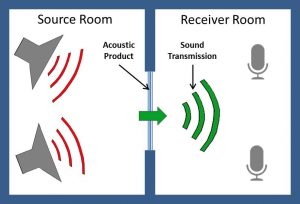 As urban areas become more population-dense, cities and developers are challenged to find quiet locations for new apartments, hotels, offices, and commercial spaces. Effective use of acoustic products has become essential to creating quiet spaces.
The Sound Transmission Class (STC) rating is one way to measure the level of sound that products can block. Sound ratings are not new. They originated in the 1960s to compare how well doors, windows, walls, and ceilings act as sound barriers and were updated in the 1990s.
STC rating determines the level of sound that can move from one room, through the product in question to another room. The more effectively the sound is blocked, and transmission is reduced, the higher the score.
The STC score can then be used to select and compare products needed to achieve the desired outcome. For example, a hotel with a highway on one side and a lake on the other may choose products with the score best suited to optimize the respective conditions.
It’s not enough to rely on ratings when selecting products. The process of specifying sound-dampening products requires accurate testing and rating protocols, and should also include measurements for transmission loss (TL) and outdoor-indoor transmission class (OITC) in addition to STC.
Additionally, it is essential to understand the noise frequency. Air traffic has a lower frequency while train/subway noise has a higher frequency. Products with high STC ratings may not be effective with specific frequencies. Third-party independent product test results are a great way to evaluate the entire sound spectrum, at multiple frequencies.
So when your design calls for specific acoustic attenuation — hospitality, education, medical, residential, or other — our experts can help you specify and detail the design components necessary to meet your most demanding sound performance requirements.