
Why window thermal breaks are important
06/28/2022
Aluminum-framed fenestration systems are among the most common type of framing used in commercial buildings, selected for exceptional strength, durability, and aesthetics. However, aluminum is a highly conductive material and requires thermal breaks to effectively reduce the amount of thermal energy that transmits from the exterior to the interior. Thermal breaks are designed to do just that, prevent the metal frame from acting as a radiator on a hot day, or on a cold day to prevent heat loss.
What is a thermal break?
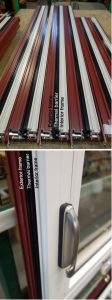 Simply, a thermal break is a continuous barrier between the inside and outside of window/door frames that prevents conductive thermal energy loss and physically joins the interior and exterior frames of the window sash or door.
Most contemporary fenestration products use fiberglass-reinforced polyamide thermal struts to separate the interior from the exterior assemblies. This material is exceptionally strong, non-conductive, and expands and contracts at the same rate as aluminum. Polyamide thermal strut shapes can incorporate design attributes to support weather-stripping, hardware attachments, and other enhancements. This method also enables dual finishes in which the exterior finish is a different type or color than the interior finish.
Another option is ‘pour-and-debridge’ which requires the exterior and interior frame profiles to be extruded in a single shape that incorporates a channel in the space separating each side. A two-part polyurethane mixture is poured into the channel, allowed to cure to solid, and then debridged by milling out the bottom of the channel, thereby separating the interior from the exterior.
What are the benefits of a thermal break?
Energy-savings
Thermal breaks are essential for any external modern glazing system. Studies show that fenestration design with polyamide thermal barriers conducts up to 1,000 times LESS heat than aluminum. Windows without thermal barriers can be responsible for up to 30% of a building’s heat loss, impacting energy efficiency, and heating/cooling costs.
Condensation prevention
Thermal breaks prevent condensation. Without a thermal break, metal frames get as cold on the inside as they are on the outside. When the frames become cold, the interior humidity can condense on the frames. Over time condensation can damage the window or door, flooring, walls, and interior millwork and potentially result in mold. In extremely cold climates, condensation can freeze or result in frost build-up preventing the window/door from operating.
Sound insulation
Thermal break dampens vibrations between the outer and inner frame, making noise transmission a thousand times slower than standard aluminum.
Air tightness / Water tightness
Polyamide expands and contracts similarly to aluminum, creating a stable, durable seal that prevents the transmission of air or water.
Strength
A thermally broken window or door has a thermal strut with metal half-shells surrounding it on both sides. This makes for a stronger framework. The polyamide struts are also able to withstand heat/cold in fenestration systems better than any other system, resulting in improved structural integrity.
Design possibilities
By separating the interior and exterior parts of the frame, the two separate aluminum extrusions can easily have different paint or anodized color combinations, offering unparalleled design possibilities. The internal frame can match the internal color scheme, while the exterior frame can be part of the building’s exterior design.
Aluminum-framed fenestration systems are among the most common type of framing used in commercial buildings, selected for exceptional strength, durability, and aesthetics, and when designed with fiberglass-reinforced polyamide thermal barriers offer added energy efficiency and savings. To learn more about how aluminum window frames improve thermal comfort, contact our window experts today.